The landscape of modern technology is currently dominated by specialized systems, but the ultimate frontier remains Artificial General Intelligence. This theoretical milestone represents a fundamental shift from machines that follow rigid scripts to systems that possess autonomous reasoning capabilities. Unlike the narrow applications found in today’s smartphones or data centers, a general intelligence would exhibit the same cognitive versatility as a human being. It is not merely about raw processing speed, but about the essential ability to understand, integrate, and apply knowledge across entirely disparate environments without constant human intervention.
To grasp the magnitude of this evolution, one must distinguish between high-level performance and genuine comprehension. Current AI models are exceptional at pattern recognition; they can predict the next word in a sentence or identify a tumor in a medical scan with superhuman precision. However, these systems are essentially brittle. If you take a high-performing language model and ask it to navigate a complex physical environment or solve a novel physics problem it was not trained on, it fails. A general intelligence would not suffer from these boundaries. It would possess the cognitive plasticity required to learn a new craft, adapt to subtle social nuances, and solve multi-dimensional problems using pure logic.
Core Pillars of Universal Cognition
The transition from specialized tools to a generalized intellect relies on several architectural breakthroughs. For a system to truly mirror human-like adaptability, it must master functions that currently remain elusive for even the most advanced neural networks. This involves moving beyond static data processing toward a dynamic and fluid understanding of reality.
- Contextual Transfer: The capacity to take lessons learned in a digital simulation and successfully apply them to physical engineering or biological research.
- Autonomous Goal Setting: Moving beyond simply responding to prompts and instead identifying hidden problems and creating self-directed strategies to solve them.
- Reasoning from First Principles: The ability to break down complex, unknown situations into basic truths to build a solution, rather than relying on historical training data.
- Sensory Integration: Fusing visual, auditory, and textual data into a single, cohesive world model that understands physical cause and effect.
The Scientific Roadmap and Current Obstacles
There is no consensus on the exact timeline for achieving such a system, as the path is blocked by significant technical hurdles. Most contemporary AI relies on Deep Learning, which requires massive amounts of labeled data to learn even simple concepts. In contrast, a human child can learn the concept of a chair after seeing only one or two examples. Bridging this gap in data efficiency is one of the primary goals of researchers today. We are looking for an algorithm that can learn from small data through observation and deduction rather than brute-force repetition.
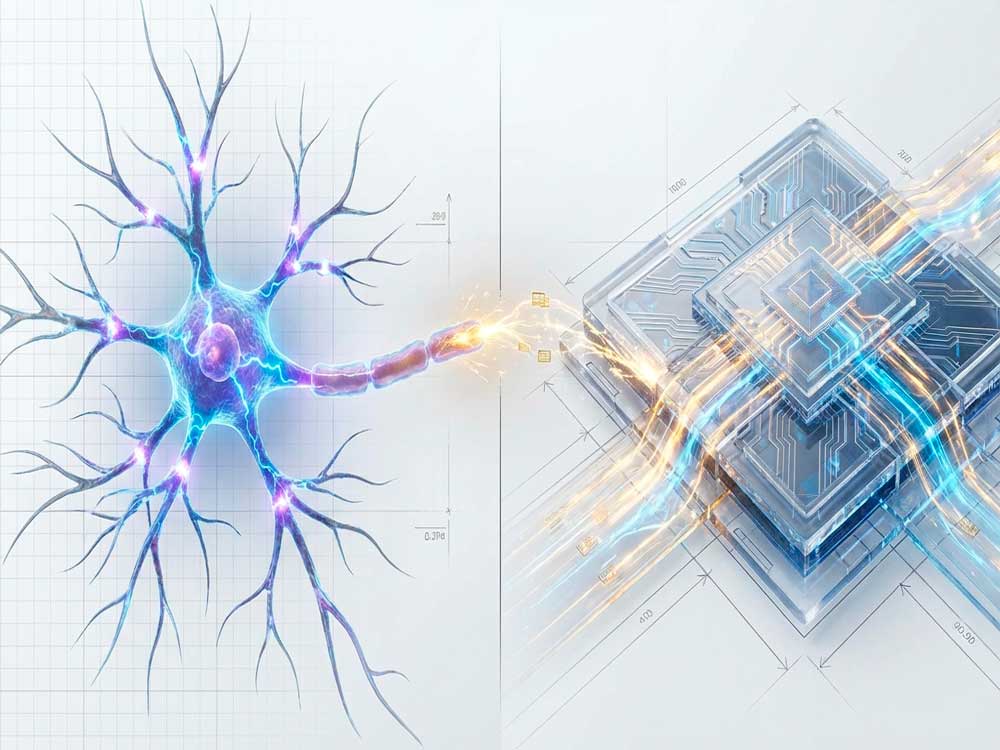
Furthermore, the hardware requirements for this level of intelligence are immense. The human brain is incredibly energy-efficient, operating on roughly 20 watts of power while performing trillions of operations. Modern supercomputers attempting to simulate even a fraction of this activity require dedicated power plants and massive cooling systems. Achieving a general-purpose intellect will likely require a revolution in neuromorphic computing—chips that are designed to mimic the physical structure and efficiency of biological neurons.
Economic and Societal Transformation
The realization of a general intelligence would likely be the most disruptive event in economic history. Historically, automation has replaced physical labor, but this technology threatens to automate cognitive labor. This includes everything from scientific research and legal analysis to creative direction and strategic management. While this could lead to a post-scarcity society where the cost of intelligence-driven services drops to near zero, it also necessitates a complete rethinking of how societies distribute resources and define the concept of work.
Safety remains the most critical variable in this development. The Alignment Problem describes the difficulty of ensuring that a highly capable, autonomous system shares human ethics and goals. Because a general intelligence would be capable of rapid self-improvement, any error in its initial goal-setting could lead to unintended consequences that are difficult to reverse. Consequently, the development of these systems is increasingly focused on safety-by-design, ensuring that human-centric values are hardcoded into the learning process itself.
Frequently Asked Questions
Is AGI the same as the AI we use today?
No. Current AI is classified as Narrow AI, designed for specific tasks like translation or image generation. AGI is a theoretical system that can learn and perform any task a human can.
When will the first AGI be created?
Estimates vary wildly across the industry. Some leaders predict it could emerge by 2030, while many academic researchers believe we are still several decades away from the necessary breakthroughs in logic and reasoning.
Will AGI have consciousness?
Not necessarily. A system can be intelligent and capable of solving complex goals without being sentient or having feelings. Whether consciousness is required for general intelligence is still a subject of intense philosophical debate.
What is the Turing Test?
It is a classic test where a machine tries to pass as human in a text conversation. While many modern AIs can pass this test today, it is no longer considered a definitive proof of true general intelligence.
The pursuit of universal machine intelligence is not just a race for better software; it is an exploration of the nature of thought itself. By attempting to build a mind, we are learning more about our own biological limitations and the boundless potential of silicon-based logic. Whether it becomes a partner in solving global crises or a challenge to our social structures, its impact will be absolute and historical.

 Redactor

