WordPress AI agents content publishing is expanding as WordPress.com introduces a new capability that allows AI tools to directly create, edit, and publish content on websites. The update, covered in latest AI news, enables systems such as ChatGPT, Claude, and Cursor to take action through conversational prompts rather than manual workflows.
WordPress AI Agents Content Publishing: What Changed
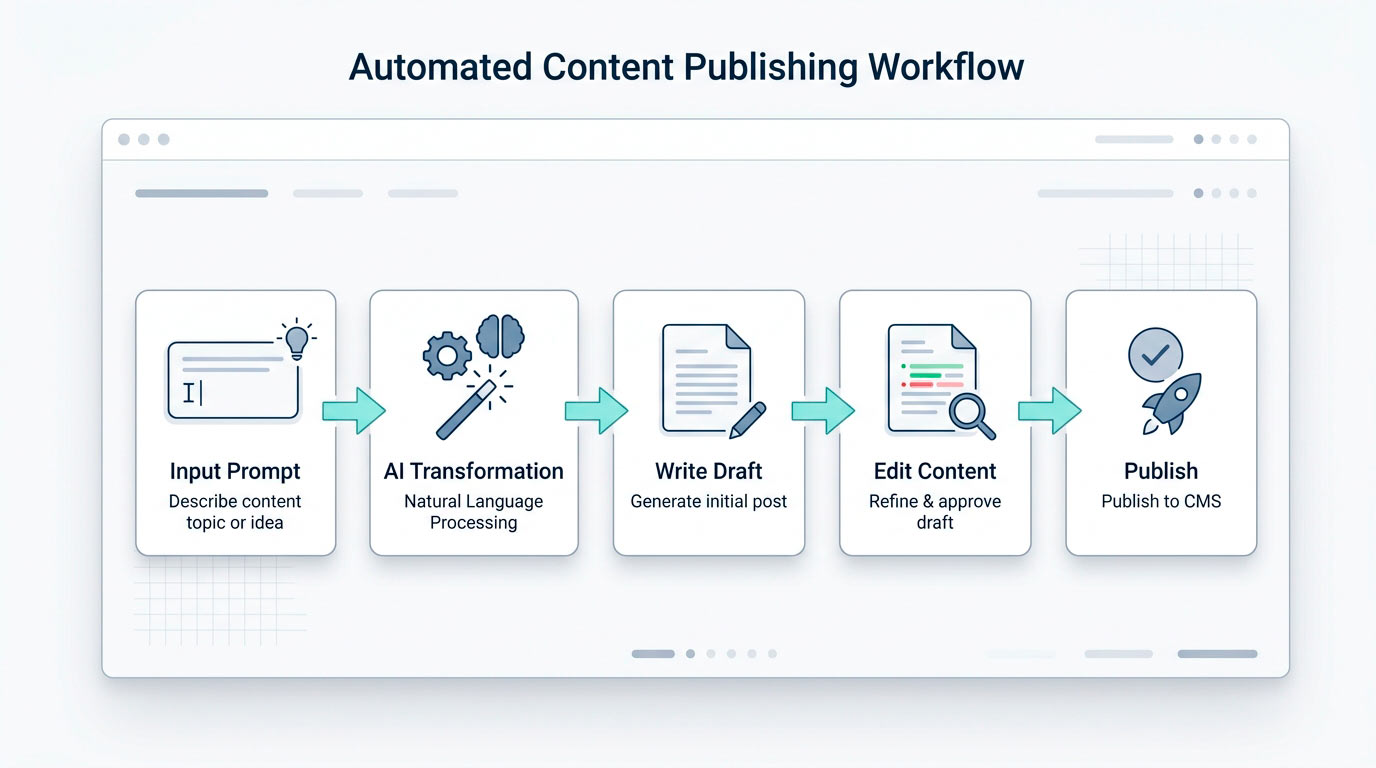
WordPress.com announced that external AI agents can now interact with websites hosted on its platform and perform content management tasks. According to the company, these agents can execute actions such as drafting posts, updating pages, and publishing content using natural language commands.
The feature is designed to work with a range of AI systems, including OpenAI’s ChatGPT, Anthropic’s Claude, and developer-focused tools like Cursor.
TechCrunch reports that this functionality allows AI tools not only to generate content but also to push it live, reducing the need for manual intervention in the WordPress interface.
The key change is not content generation itself, but the ability for AI systems to execute actions directly within the CMS environment.
Key Capabilities of AI-Driven Content Publishing on WordPress
- AI agents can create and publish blog posts directly on WordPress.com sites
- Natural language commands replace traditional dashboard workflows
- Integration supports multiple AI systems, including ChatGPT, Claude, and Cursor
- Developers can connect AI tools to WordPress via APIs
- Content updates and edits can be executed programmatically through AI agents
According to the PR Newswire release, the system allows these agents to “take direct action” on WordPress.com sites through conversational inputs.
Technical Infrastructure Behind WordPress AI Agent Integration
The capability is built around WordPress.com’s API infrastructure, which has been extended to support AI-driven interactions. This allows external systems to authenticate and execute content operations programmatically.
Instead of requiring developers to manually structure API calls, AI agents can translate natural language into executable actions. This effectively turns conversational prompts into backend operations within the content management system.
WordPress.com, operated by Automattic, describes this as part of a broader shift toward AI-native workflows. In its positioning, AI tools move from passive assistants to active participants in site management.
The announcement references compatibility with multiple AI ecosystems, including those developed by OpenAI and Anthropic, indicating a platform-agnostic approach.
The company has not detailed limitations or safeguards around how these actions are reviewed or controlled, and the current announcement focuses primarily on capabilities rather than governance.
Why WordPress AI Agents Content Publishing Matters
This update reflects a shift in how content management systems operate. Instead of users navigating dashboards manually, AI agents can execute tasks end-to-end, from drafting to publishing.
For developers and enterprises, this could simplify automation pipelines by allowing AI systems to handle routine publishing tasks. According to the company, this may reduce friction in workflows involving content generation and deployment.
The move also places WordPress.com within a broader trend of integrating AI into software platforms. Companies including Microsoft and Google are embedding AI into productivity tools, while developer platforms are increasingly adopting AI-driven automation.
By enabling direct action, WordPress.com moves AI from a supportive role into an operational layer within its platform.
AI Assistance vs AI Agent Execution in WordPress
| Model | Role of AI | User Involvement |
|---|---|---|
| AI-assisted workflow | Helps generate or improve content | Users typically complete the final CMS actions manually |
| AI agent workflow | Interprets prompts and executes content actions inside the platform | Users shift from manual execution toward instruction-based control |
What Comes Next for AI-Driven CMS Workflows
The company has not outlined future expansions, but the rollout establishes a foundation for more advanced automation scenarios. These could include multi-step workflows, integrations with external services, or deeper customization for developers.
As AI agents evolve, direct integration with platforms like WordPress may influence how content is created and managed across the web.
Editorial Perspective
The shift described by WordPress.com suggests a move beyond AI-assisted publishing toward systems that can execute actions directly within content platforms. While the company frames this as workflow simplification, it also introduces critical questions around control and oversight. At scale, automated publishing without human review risks amplifying AI hallucinations, generating low-quality SEO spam, or compromising brand voice. As these agents become more autonomous, establishing clear governance protocols will be just as important as the technological integration itself.
 Redactor