In 2026, your X-ray is often reviewed by an algorithm before a doctor ever sees it. Your bank flags suspicious activity in milliseconds. Your marketing emails are written, tested, and optimized by AI before you wake up.
This is not the future of AI. This is the present.
The real question now is not what is the future of AI, but how deeply it will reshape our industries, careers, and daily lives over the next decade. Below is a strategic roadmap of changes that will impact your workplace, your business, and even your health in the coming years.
AI Market Forecast 2026–2035
Let’s start with the numbers — because scale matters. According to deep-sector analysis by PwC, the global economic impact of AI is set to accelerate exponentially.
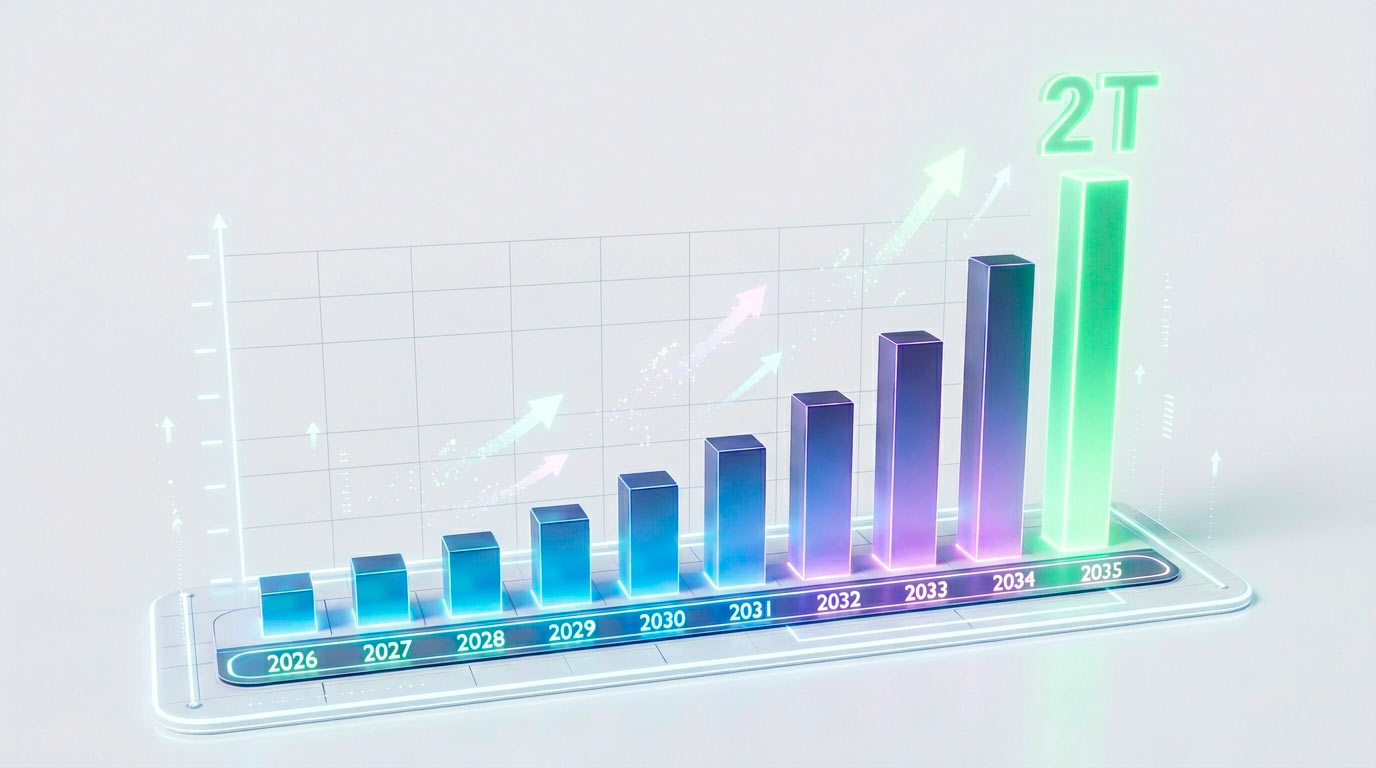
- Global AI market value in 2026: $320–350 billion
- Generative AI revenue in 2026: $65+ billion
- Estimated CAGR (2023–2025): 32–35%
- Projected AI market size by 2035: $1.8–2.2 trillion
- Potential annual productivity contribution: $4.4 trillion (Source: McKinsey Global Institute)
This is not incremental innovation. It is structural economic redesign.
“AI is one of the most profound technologies humanity is working on — more profound than fire or electricity.”
— Sundar Pichai, CEO of Google
By 2035, over 75% of enterprises are expected to embed AI into core decision-making systems. Healthcare AI spending is projected to grow at nearly 38% CAGR, while financial institutions may cut operational costs by up to 40% through AI-powered automation.
AI and the Future of Work
For many professionals, this conversation feels personal. Will AI take my job? Or will it make me more valuable? Research from Goldman Sachs suggests that while disruption is inevitable, it also paves the way for a productivity boom.
- Up to 400 million workers may require reskilling by 2030.
- AI could create approximately 97 million new roles.

Automation will eliminate tasks, not human potential.
Routine administrative work, standardized data processing, and repetitive diagnostics will increasingly be automated. But strategic thinking, empathy, leadership, and complex problem-solving will become even more valuable.
Industry Impact Comparison (2026–2035)
| Industry | AI Impact Level | Automation Risk | Growth Potential |
|---|---|---|---|
| Healthcare | 🟢 Very High | 🟡 Medium | 🟢 Very High |
| Banking & Finance | 🟢 Very High | 🔴 High | 🟢 High |
| Manufacturing | 🟡 High | 🔴 Very High | 🟡 Medium |
| Education | 🟡 High | 🟢 Low | 🟢 High |
| Marketing & Media | 🟢 Very High | 🟡 Medium | 🟢 Very High |
The Future of AI in Healthcare
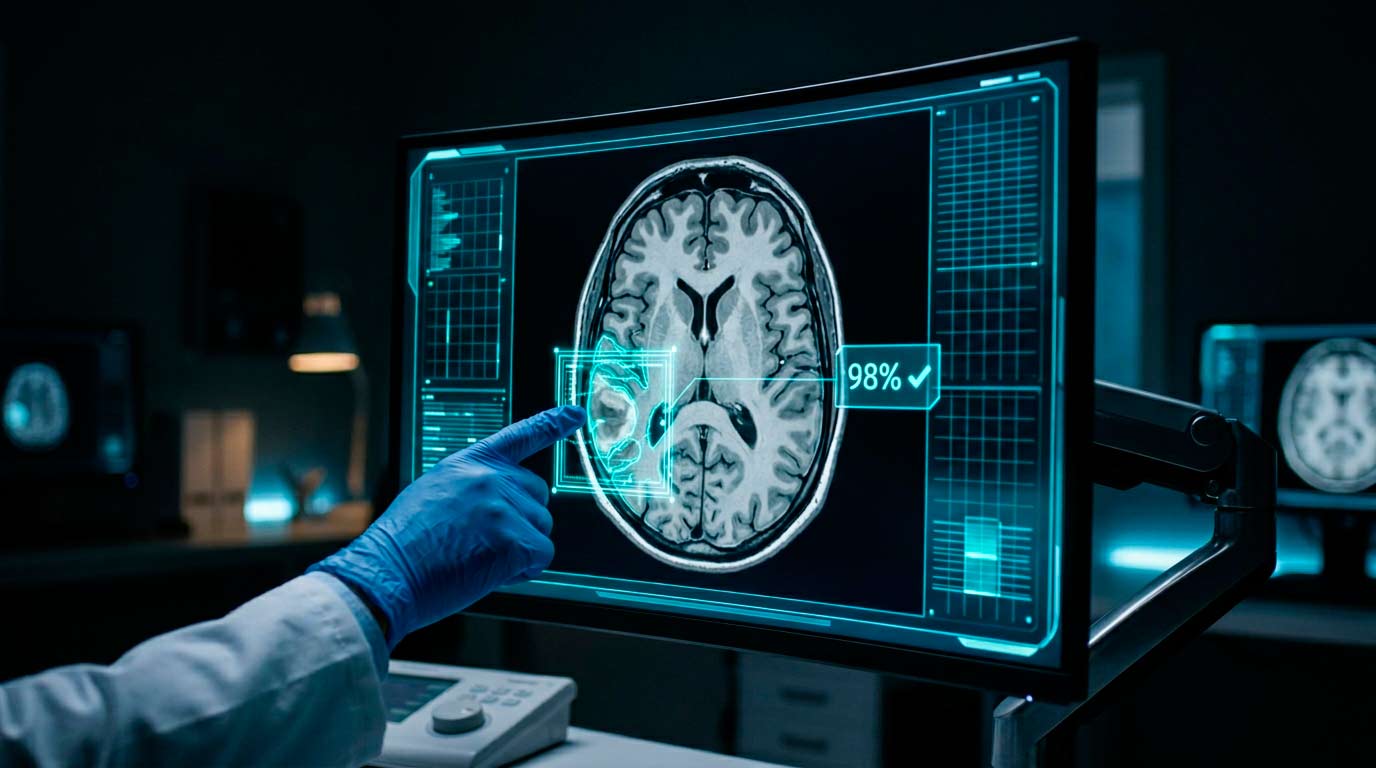
Imagine visiting a hospital where AI predicts complications before symptoms appear. AI-driven diagnostics in radiology now reach 95–98% accuracy in specific use cases. Drug discovery timelines are being shortened by nearly 50%.
The Future of AI in Business and Marketing
In the coming years, Gartner predicts a massive shift toward “Agentic AI” where autonomous systems handle entire workflows. In marketing, AI personalization increases conversion rates by 20–40%.

“Every company is becoming an AI company.”
— Satya Nadella, CEO of Microsoft
The Future of Generative AI
By 2030, up to 50% of enterprise software code may be AI-assisted. Designers prototype faster. Writers ideate faster. Engineers simulate faster. Generative AI is not replacing creativity — it is amplifying it by lowering the barriers to entry and reducing experimentation costs.
Ethics, Governance, and Human Responsibility
The future of AI is not purely technological — it is political and ethical. Six fundamental questions remain: Who governs advanced AI? How do we prevent bias? How do we protect privacy? The next decade will likely bring stronger global regulations and transparency mandates.
Strategic Recommendations for 2026–2035
1. Invest in AI Literacy
AI literacy must become as fundamental as digital literacy. Organizations that educate early gain long-term advantage.
2. Prioritize Reskilling
Workforce adaptability will determine competitive survival. Early reskilling reduces disruption costs.
3. Integrate AI into Core Strategy
AI cannot remain in innovation labs. It must shape operations, finance, risk, and customer experience.
Conclusion
The future of AI is not something that simply happens to us. It is something we are actively building. Over the next decade, AI will become embedded in every major industry. It will redefine productivity, reshape labor markets, and influence geopolitical balance.
FAQs
What is the projected size of the AI market by 2035?
The global AI market is projected to reach between $1.8 and $2.2 trillion by 2035, driven by massive adoption across healthcare, finance, and manufacturing sectors. This growth represents a structural redesign of the global economy.
Will AI eliminate jobs?
AI will automate specific repetitive tasks, but it is also expected to create approximately 97 million new roles by 2030. The focus will shift from “manual cognitive labor” to roles requiring strategic thinking, empathy, and complex problem-solving.
Which industry benefits most from AI?
Healthcare and Marketing show the highest combined growth potential. In healthcare, AI improves diagnostic accuracy and drug discovery speed, while in marketing, it enables hyper-personalization and compresses campaign production cycles.
Is AI dangerous?
AI presents risks related to algorithmic bias, privacy, and potential misuse. However, the next decade will see the rise of robust global governance frameworks and ethical mandates designed to ensure AI alignment with human values.
How should businesses prepare for the next decade of AI?
Businesses should prioritize AI literacy for all employees, invest in reskilling programs, and integrate AI directly into their core business strategy rather than treating it as a standalone IT project.
 Redactor