Google officially launched Nano Banana 2 on February 26, 2026, marking a pivotal transition to the Gemini 3.1 Flash Image architecture. This next-generation model delivers Pro-level visual reasoning and structural fidelity while maintaining the sub-second latency characteristics of the Flash series. By integrating real-time grounding via Google Search, the system achieves unprecedented accuracy in rendering localized landmarks and current real-world data.
- Native Resolution: Up to 4K (4096 x 4096)
- Character Consistency: Up to 5 unique subjects
- In-Scene Text Accuracy: ~94% (Industry Benchmark)
Executive Summary
- Firm Power: Optimized for high-throughput API environments, the model utilizes a sparse mixture-of-experts approach to reduce computational load per inference by 40% compared to previous iterations.
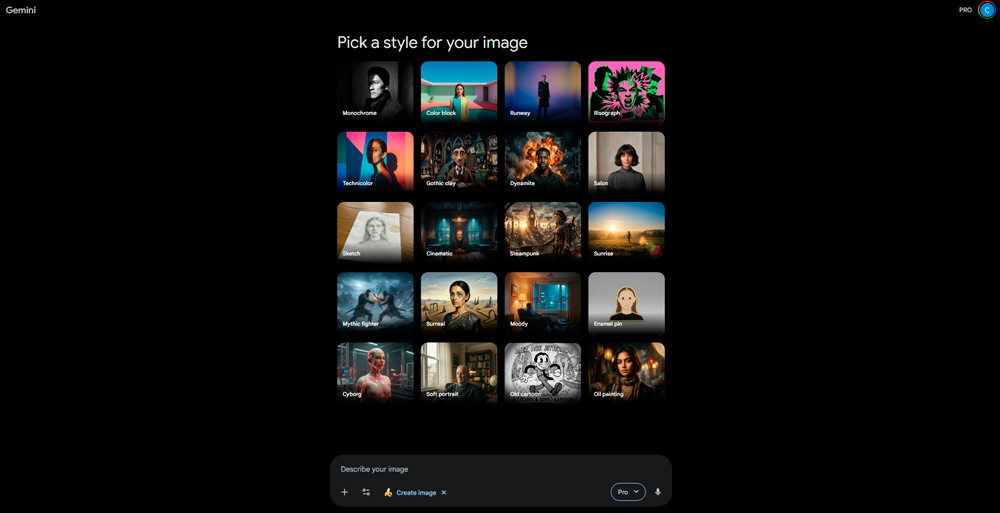
- Operational Density: Available via Vertex AI and Google AI Studio, the architecture supports native 16-bit color depth and ten distinct aspect ratios without requiring external upscaling or tiling hardware.
- Strategic Timeline: Global rollout is currently complete across 141 countries, replacing Nano Banana Pro as the default engine for Workspace and Gemini app users.
Structural Refinement
The Nano Banana 2 architecture introduces a multi-stage “Plan-Evaluate-Improve” loop that validates spatial relationships before the final pixel commitment occurs. This systemic reasoning allows the model to interpret complex physical interactions, such as fluid dynamics or interlocking mechanical parts, which traditionally caused artifacts in diffusion-only models. This shift ensures that technical visualizations remain logically consistent and production-ready.
Market Displacement
The release significantly impacts the enterprise creative sector by providing a high-fidelity alternative to computationally expensive “Pro” models. By offering native 4K output and precise typography, Google has effectively bridged the gap between rapid prototyping and final asset production, potentially reducing post-processing workflows by up to 70% for marketing and design agencies globally.
| Feature | Nano Banana 1 | Nano Banana 2 |
|---|---|---|
| Base Architecture | Gemini 2.5 Flash | Gemini 3.1 Flash |
| Max Resolution | 1024 x 1024 (1K) | 4096 x 4096 (4K) |
| Generation Speed | ~12-15 Seconds | < 10 Seconds |
| Typography Support | Basic/Inconsistent | Precision Rendering |
“Nano Banana 2 represents the first time we’ve successfully decoupled high-fidelity reasoning from high-latency processing, allowing creators to iterate at the speed of thought without sacrificing the structural integrity of the final image.”
Ainformer Analysis
The strategic deployment of Nano Banana 2 suggests that Google is no longer viewing image generation as a siloed creative tool, but as a core component of its agentic AI ecosystem. By grounding the model in real-time Search data, Google provides a critical advantage over static competitors like Midjourney or DALL-E, enabling the generation of assets that reflect current events, weather, and localized cultural nuances with high precision.
Furthermore, the inclusion of SynthID watermarking and C2PA metadata alignment signals a robust commitment to enterprise safety standards. As the industry moves toward automated UI generation and dynamic ad placement, the ability of Nano Banana 2 to handle multi-turn conversational edits will likely make it the preferred backend for high-volume programmatic creative platforms throughout 2026.
 Redactor