The landscape of consumer robotics has shifted significantly with 1X Technologies officially opening preorders for Neo, a bipedal humanoid designed specifically for domestic environments. Unlike industrial robots optimized for heavy lifting in controlled warehouses, Neo represents a transition toward embodiment AI that can safely navigate the unpredictability of a private home. Backed by strategic investment from OpenAI, 1X has positioned Neo as a general-purpose assistant. While initial units are being released via an Early Access program with limited availability, this marks a pivotal step in making sophisticated humanoid hardware accessible for personal use.
Engineering for Domestic Safety and Compliance
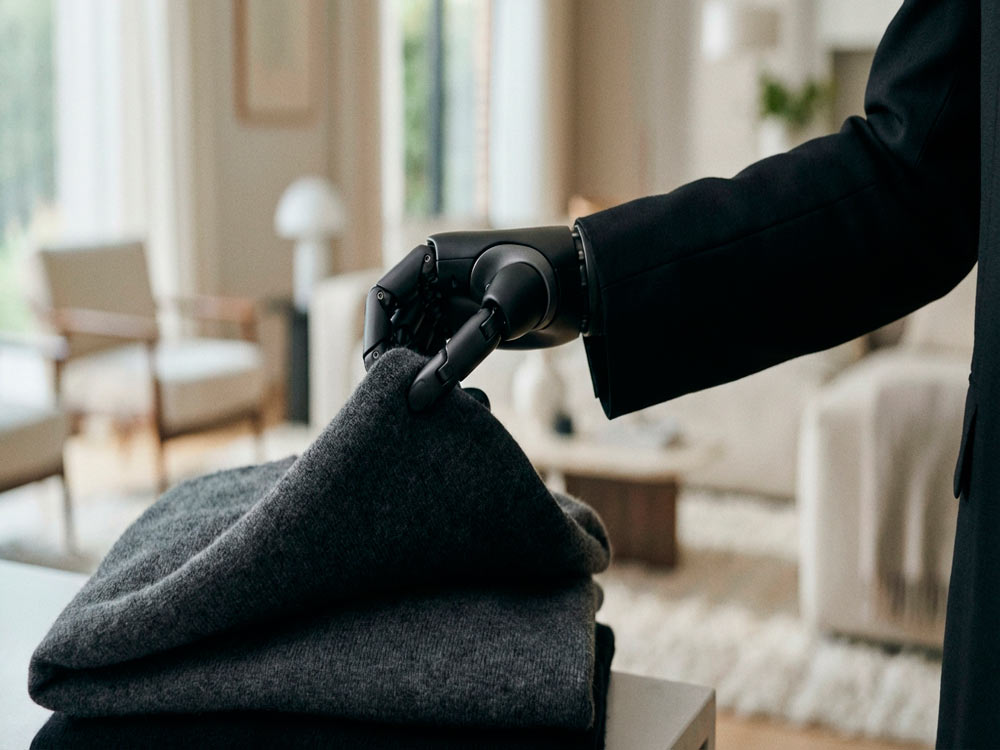
One of the primary technical hurdles for home robotics is the risk of injury during human-robot interaction. To address this, 1X Neo utilizes a proprietary tendon-driven actuator system rather than the rigid, high-torque gears found in traditional industrial robots. This “soft robotics” approach allows the machine to be inherently compliant, meaning it can absorb impact and react to physical pressure, significantly minimizing risks to residents and pets. The robot is encased in a custom-engineered textile suit that protects internal mechanics while providing a non-threatening, sleek aesthetic suitable for modern living spaces.
Integration of Large Language Models and Embodiment
The intelligence driving Neo is built on end-to-end neural networks, benefiting from the close collaboration between 1X and OpenAI. This integration enables the robot to process natural language commands and translate them into physical actions. By leveraging vision-language-action (VLA) models, Neo can identify household objects and understand spatial contexts. Currently, the robot operates in a hybrid capacity: it performs basic autonomous movements while relying on teleoperation (remote human assistance) for complex or novel tasks. This dual approach allows the system to gather high-quality data to refine its autonomous capabilities over time through reinforcement learning.
Market Positioning and the Future of General Purpose Robotics
The opening of preorders, starting with a deposit-based model and early deployment in select regions like the U.S., signals a shift from prototyping to commercial pilot phases. 1X is focusing on a direct-to-consumer strategy that emphasizes data privacy and transparency regarding the current limitations of AI autonomy. By establishing an early presence in the “home humanoid” category, 1X aims to set industry standards for human-robot interaction, prioritizing safety and adaptability over raw mechanical power. The long-term goal remains scaling production to move beyond the early-adopter price point toward broader consumer accessibility.
Expert Forecast by Ainformer
The launch of 1X Neo preorders will likely trigger a competitive surge in the humanoid market, forcing rivals like Tesla and Figure to accelerate their consumer-facing timelines. We anticipate that the first year of Neo’s deployment will serve as a massive real-world data-collection exercise, where “edge cases”—unexpected home layouts or unique household objects—will be used to train the next iteration of the AI model. Success for 1X in 2026 will not be measured by mass-market sales volume, but by the safety record and the efficiency of the “human-in-the-loop” training system. We expect the next 24 months to see a rapid evolution in soft-actuator hardware as the industry realizes that rigid metal designs are inherently less suited for the intimacy of a living room. This transition toward bio-inspired tendon-driven actuators and hybrid autonomy models will likely form the foundation for truly helpful and safe domestic assistants of the future.

 Redactor